Electronics
Continuous high-purity polishing is reviewed against the confirmed final water requirement.
Continuous electrodeionization polishing configured for high-purity water applications. Designed to work with RO permeate as feed water, EDI systems help deliver stable final water quality with reduced chemical handling and simplified operation.
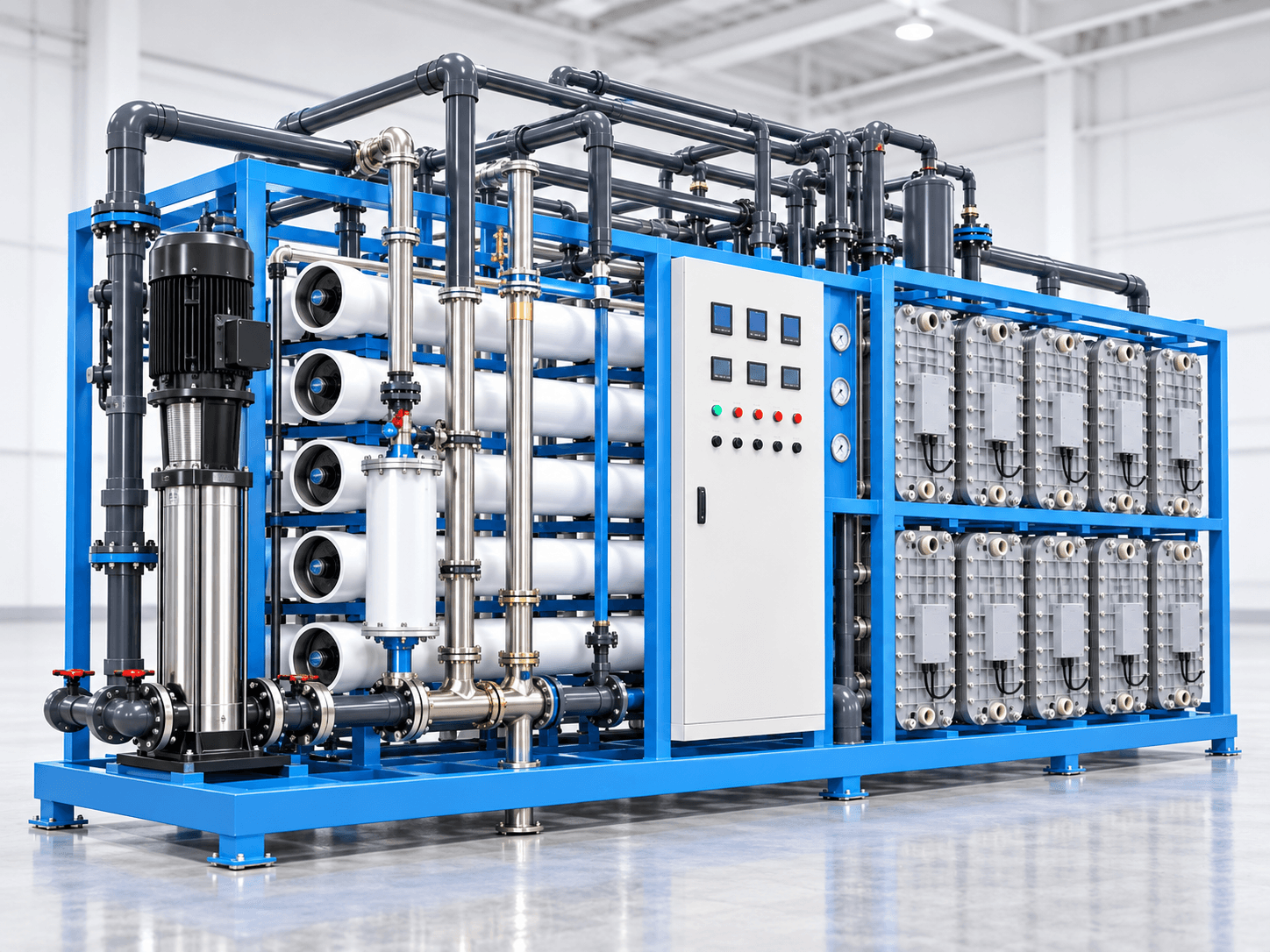
Continuous electrodeionization polishing for suitable RO permeate, configured around high-purity water requirements and the actual process duty.
Continuous high-purity polishing is reviewed against the confirmed final water requirement.
EDI is selected where correctly conditioned RO permeate needs a stable polishing stage.
High-purity water applications can use EDI as part of an engineered treatment train.
Use-point quality, materials and documentation requirements are reviewed by project.
EDI can support a consistent high-purity water basis where the application requires it.
A compact EDI polishing stage can be considered for confirmed utility water duties.
EDI is a polishing technology, not a replacement for appropriate pretreatment and RO.
The EDI stack continuously removes residual ions from correctly conditioned RO permeate. Feed hardness, CO₂, silica, conductivity and temperature need review before configuration so the polishing stage operates on a suitable basis.
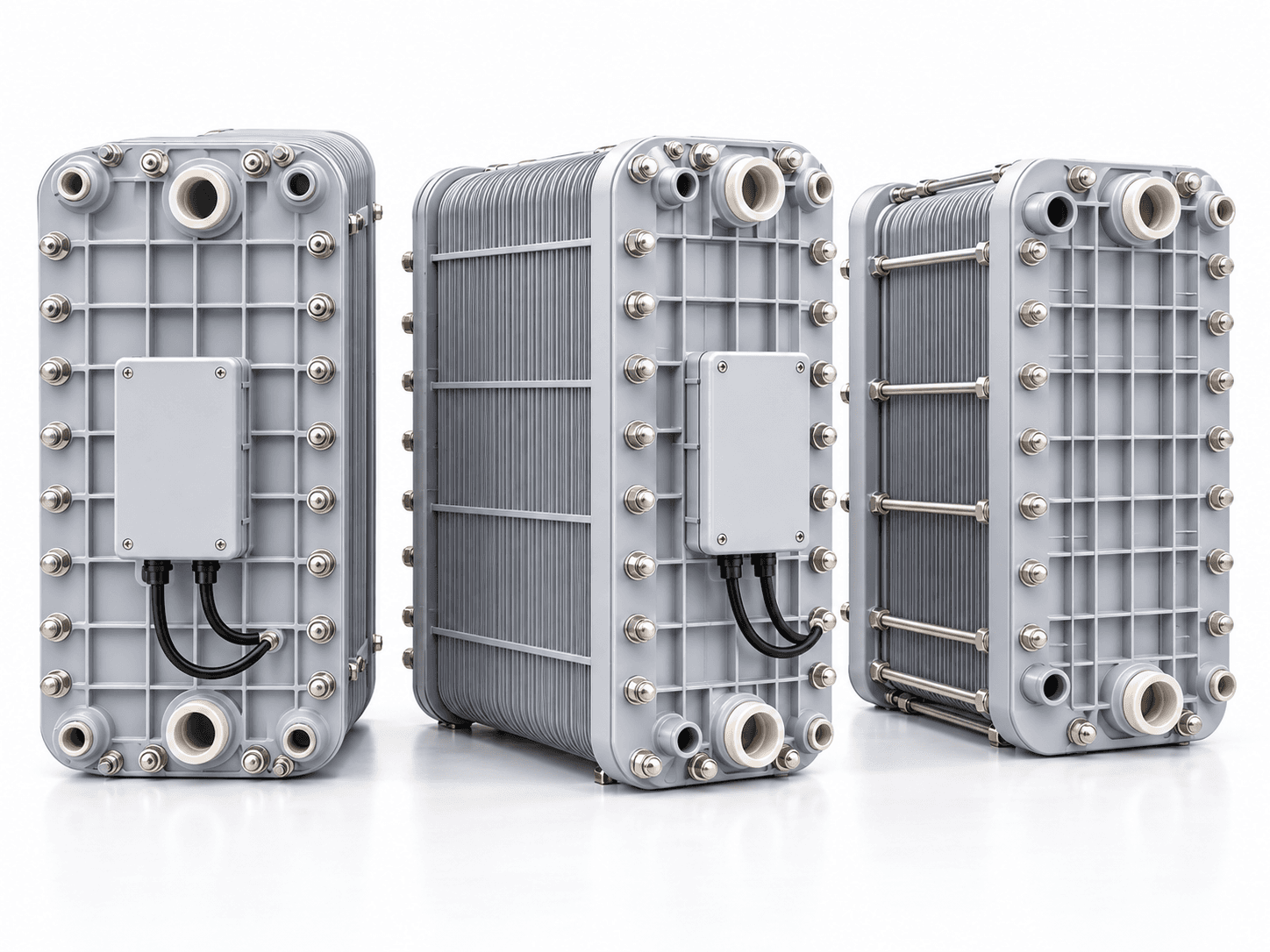
The EDI section is engineered from the quality of the RO permeate that will feed it, not from a generic raw-water basis.
| Design Input | Required Information | Why It Matters |
|---|---|---|
| EDI feed | Correctly conditioned RO permeate | Establishes the core EDI design basis. |
| Hardness | Confirmed during engineering | Residual hardness can affect EDI operation. |
| CO₂ | Confirmed if applicable | May guide degassing or upstream conditioning. |
| Silica | Water analysis required | Helps define polishing-stage suitability. |
| Conductivity | Confirmed at RO permeate | Guides EDI loading and quality expectation. |
| Temperature | Project-specific | Influences EDI operating conditions. |
| Final quality | Confirmed by process requirement | Defines monitoring and distribution requirements. |
EDI is placed after the appropriate upstream route; it is not a standalone raw-water treatment technology.
Upstream treatment is selected from source-water chemistry.
Primary desalination prepares the feed basis.
Feed quality is verified for EDI suitability.
Continuous ion removal from suitable permeate.
Quality-monitored water moves to storage or use point.
The EDI module should be selected only after verifying the condition of the RO permeate that will feed it.
Appropriate pretreatment and RO are used to establish the EDI feed condition.
Residual water chemistry and operating temperature are reviewed before final EDI selection.
EDI provides continuous ion-removal polishing after the upstream treatment route is confirmed.
The final EDI configuration is determined from feed suitability, capacity and the approved high-purity water requirement.
| Parameter | Typical Option / Range | Engineering Note |
|---|---|---|
| Capacity | Project-specific | Sized from demand and operating hours. |
| EDI feed | RO permeate | Must be confirmed suitable during engineering. |
| Hardness / silica | Confirmed during engineering | Reviewed for reliable EDI operation. |
| CO₂ | Confirmed if applicable | May guide degassing review. |
| Final quality | Confirmed by process requirement | Defines monitoring and final-water control. |
| Controls | PLC / HMI options | Sequencing and alarms follow approved scope. |
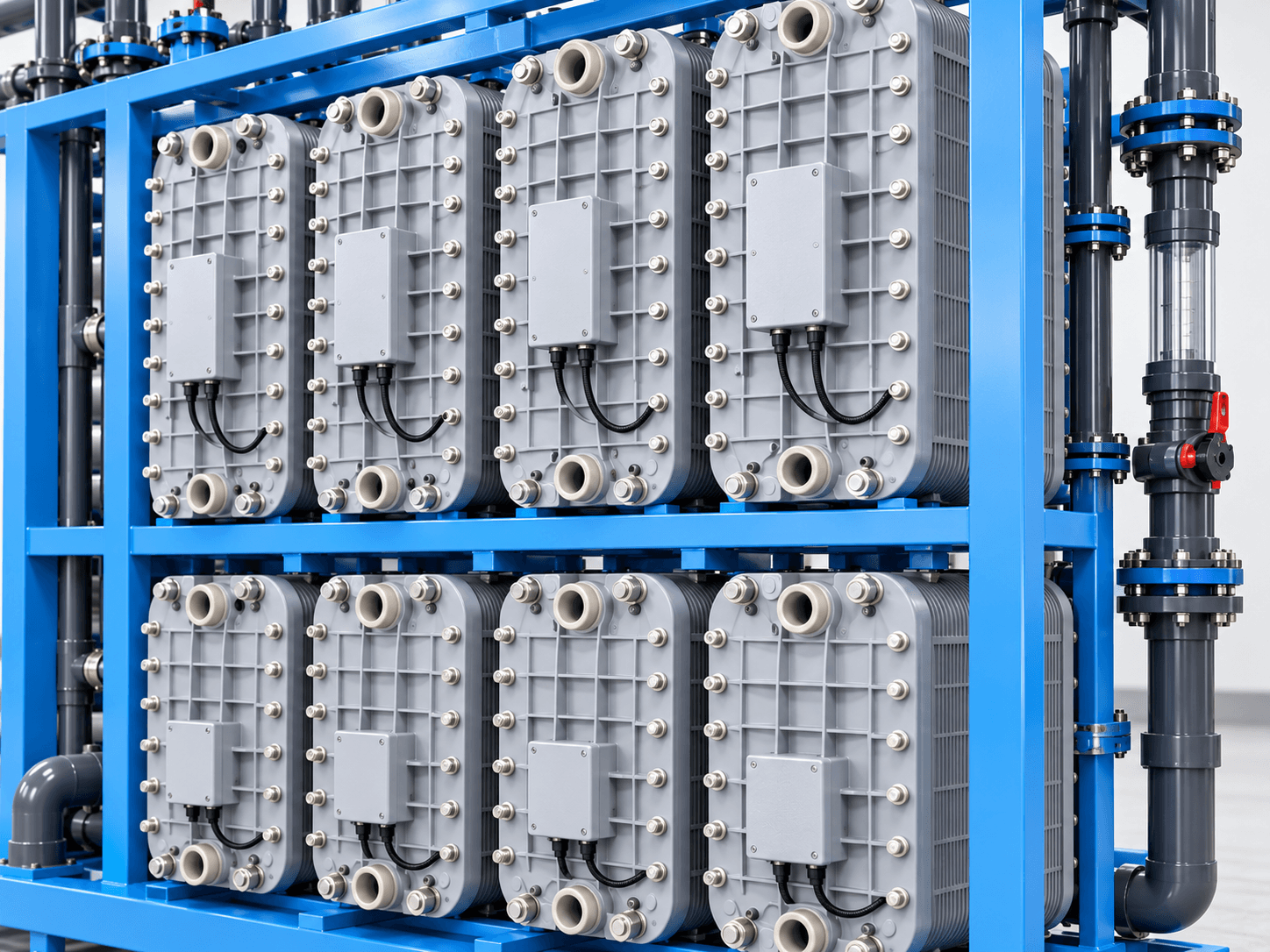
Component and brand selection can be discussed according to the approved project requirements.
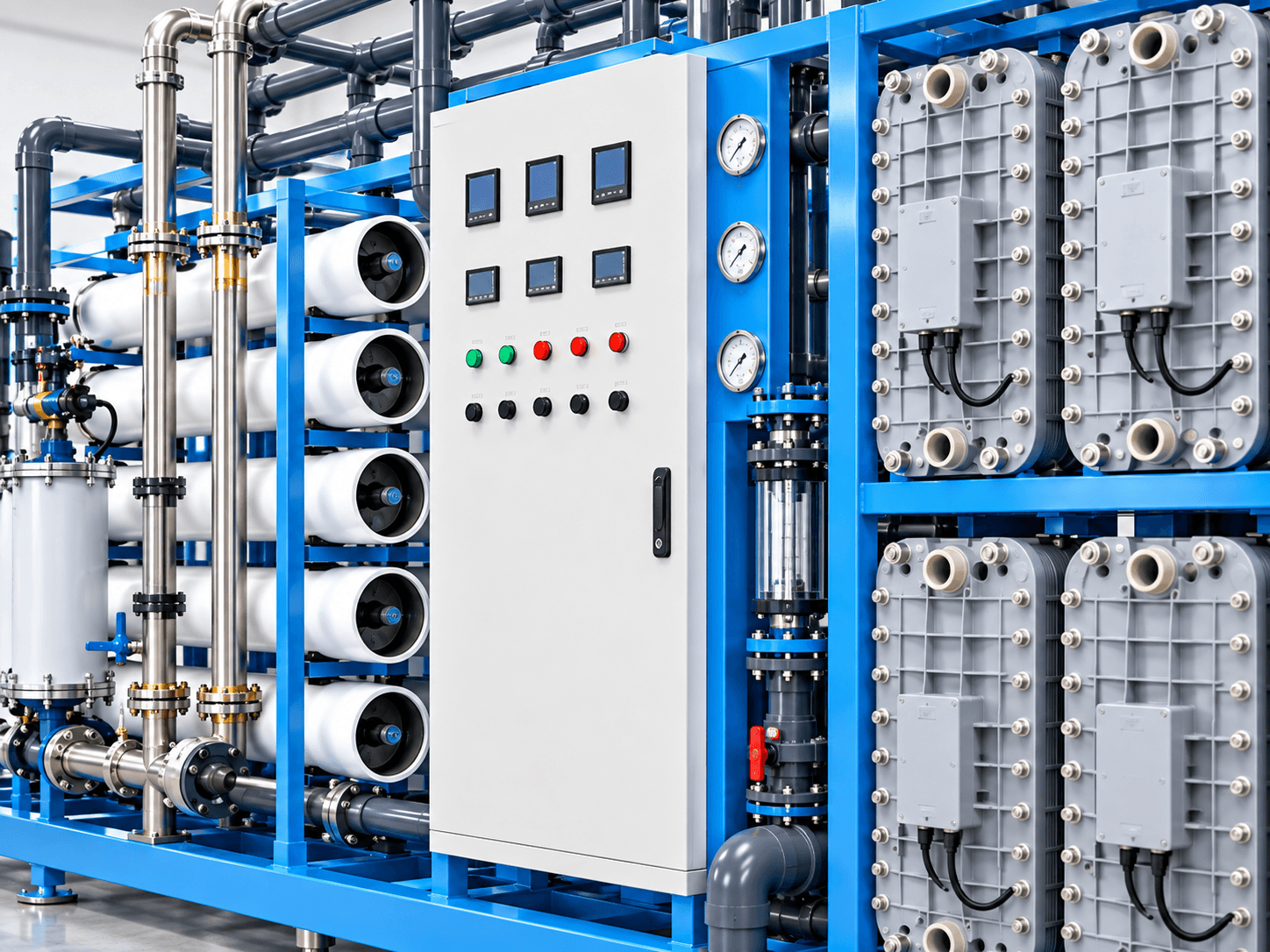
Controls coordinate EDI power, feed interlocks, quality monitoring and protective alarm logic around the approved project scope.
Optional upstream and downstream modules are reviewed against the confirmed feed and final-water duty.
Second-pass RO
Membrane degasser
Pretreatment review
Feed conductivity monitoring
EDI redundancy
UV
Final filtration
Product-water tank
Distribution loop
Point-of-use controls
Remote monitoring
Data logging
Material options
Documentation scope
Container enclosure
Confirm RO permeate, product-water, electrical and quality-monitoring interfaces before the EDI package is finalized.
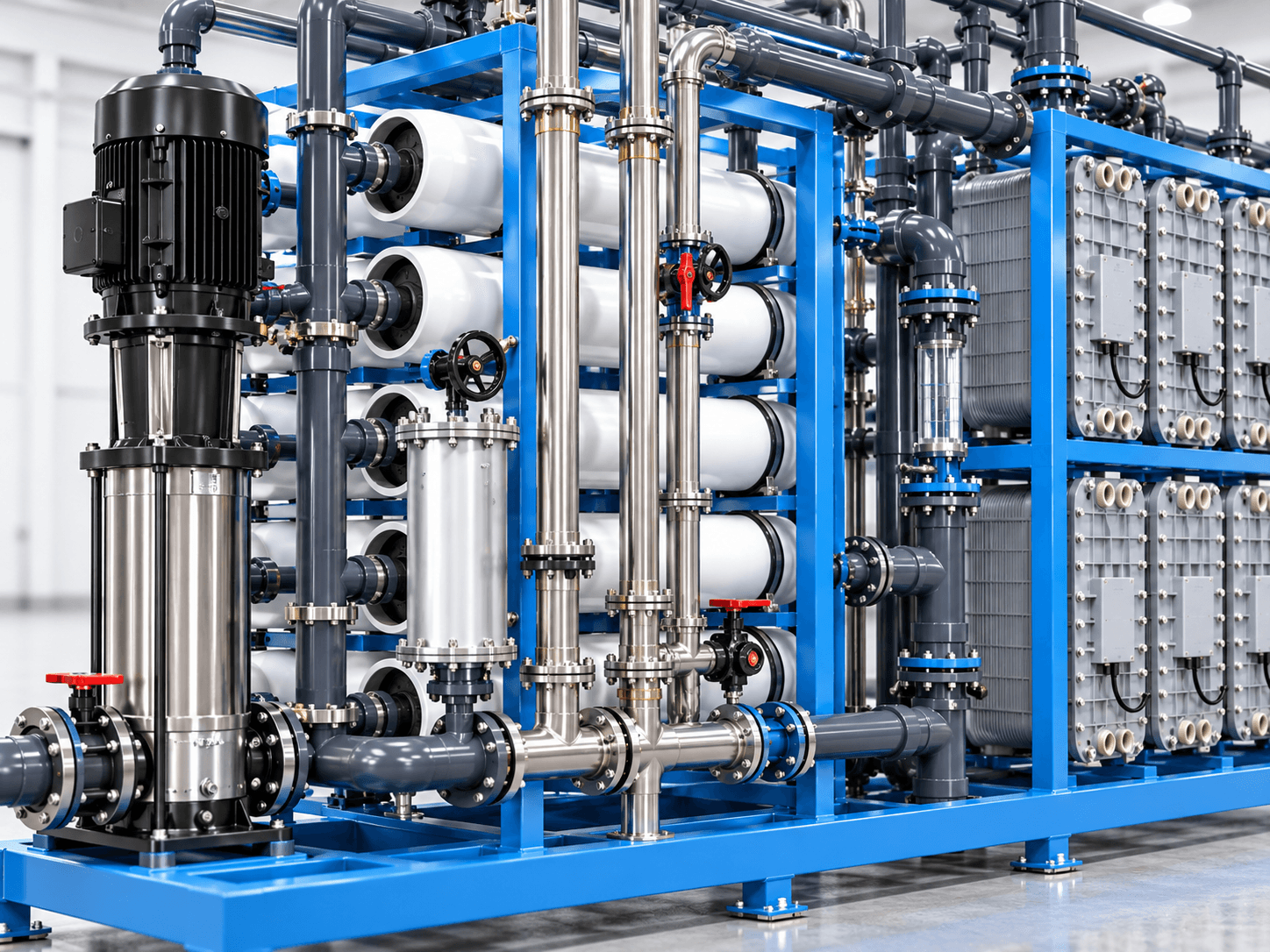
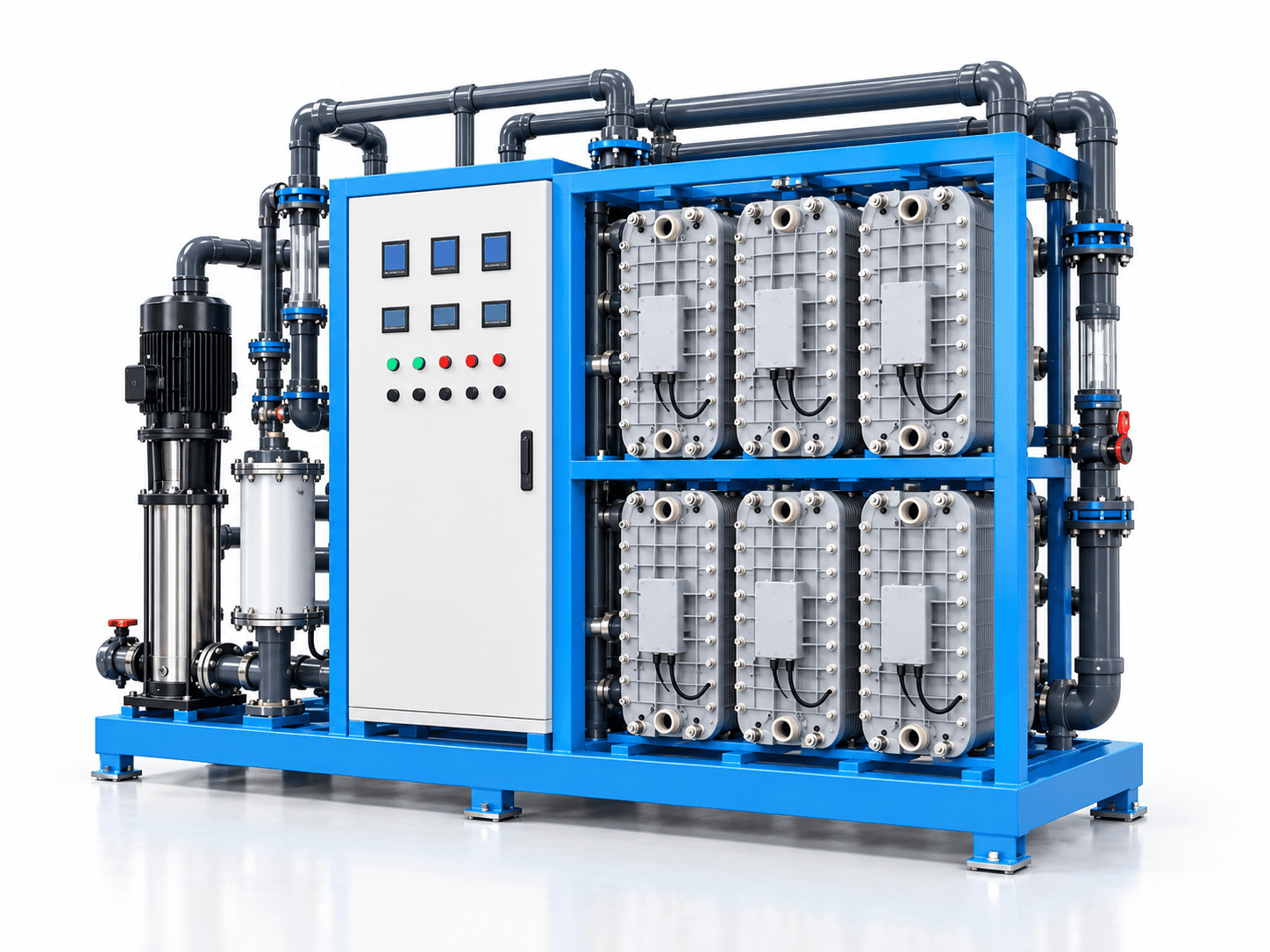
Assembly, inspection and functional review are planned against the approved technical agreement and agreed project scope.
Final FAT scope and acceptance criteria are confirmed in the approved technical agreement.
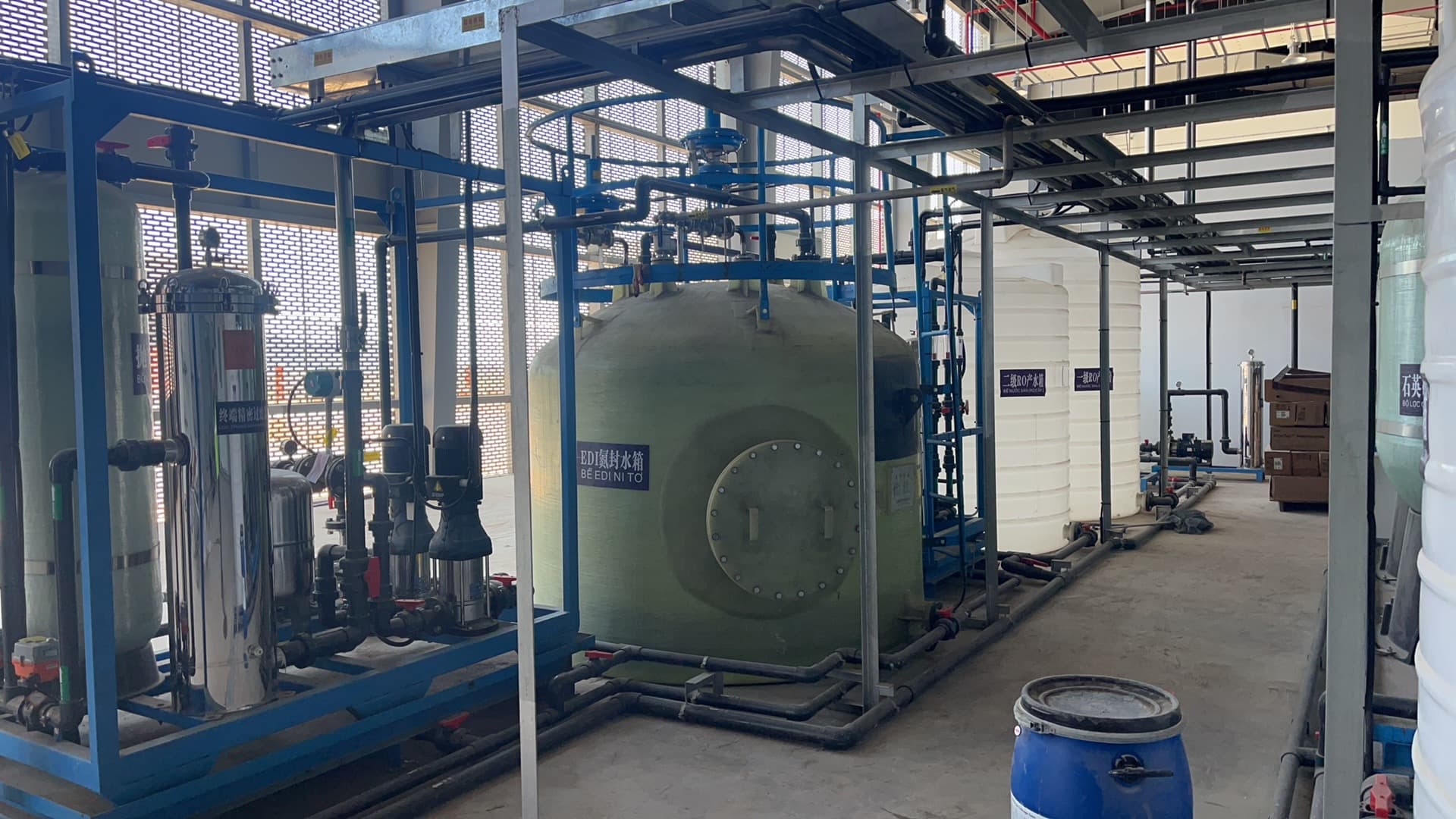
A modular pure-water system configured for an overseas battery manufacturing project, including RO and EDI stages within the treatment route.
Cost follows the capacity, RO permeate condition, final-water quality target, monitoring scope and the supporting treatment stages required for the project.
Direct answers for engineering, procurement and project-planning discussions.
No. EDI is a polishing technology, not a replacement for appropriate pretreatment and RO. It normally receives correctly conditioned RO permeate.
RO permeate hardness, CO₂, silica, conductivity, temperature, capacity and final-water target should be reviewed during engineering.
EDI provides continuous deionization without conventional acid/alkali resin regeneration, subject to the approved system design and operating conditions.
Online conductivity monitoring, protective interlocks and control logic are configured around the approved final-water duty and operating scope.
Yes. Downstream stages can be selected where the confirmed application requires additional controls.
Send source-water analysis, available RO permeate data, required capacity, final-water quality, application, operating hours and site conditions.
| System | Industrial RO | EDI system | Ultrapure water |
|---|---|---|---|
| Best for | Primary desalination | Continuous ion-removal polishing | Critical purity applications |
| Typical route | Pretreatment → RO | RO permeate → EDI | RO → EDI → polishing stages |
| Feed basis | Raw / pretreated source water | Correctly conditioned RO permeate | Application-specific stage inputs |
| When to use | RO permeate meets duty | High-purity polishing required | Multiple critical controls required |
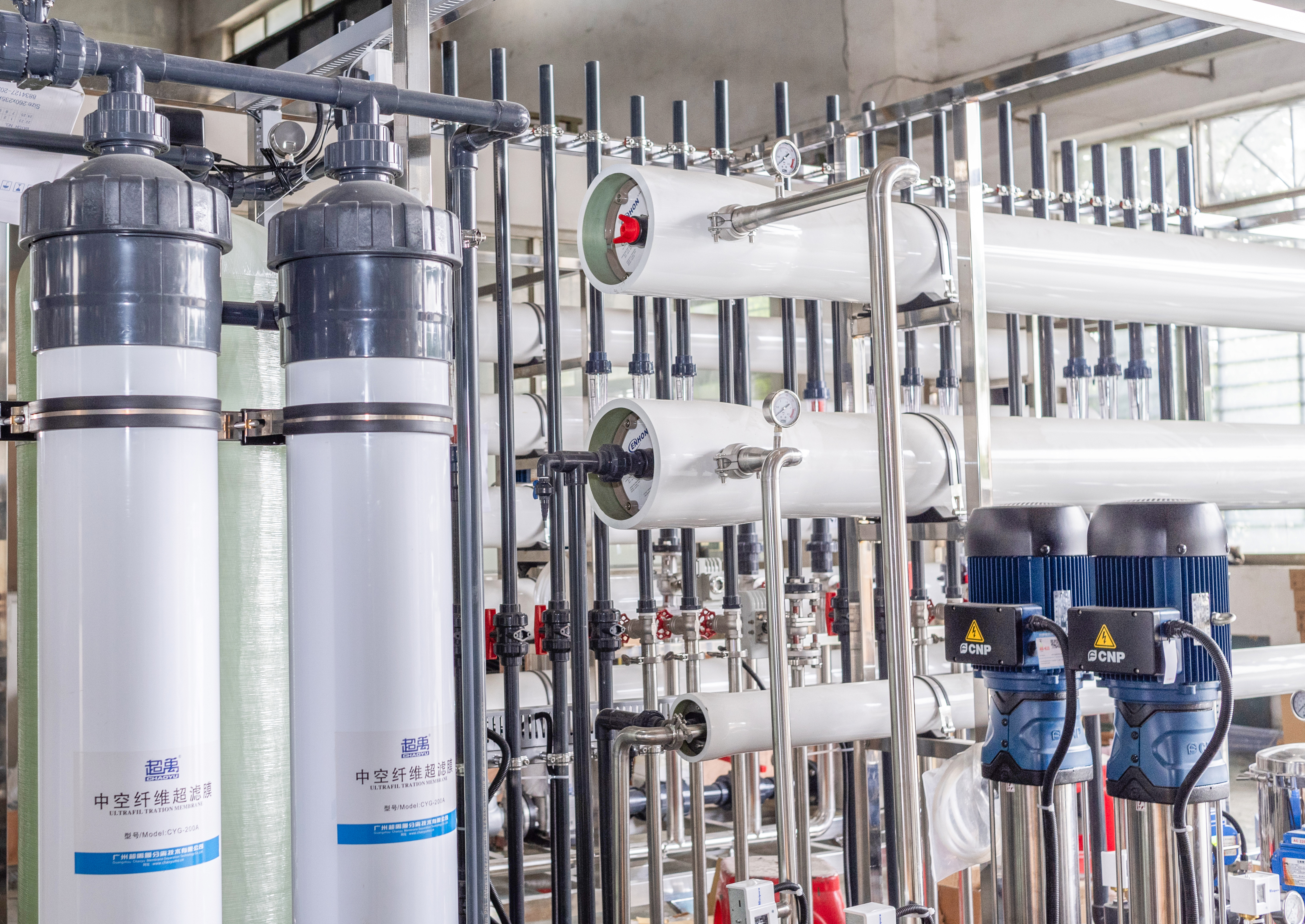 Reverse Osmosis
Industrial RO systems engineered around feed-water analysis, capacity and product-water duty.
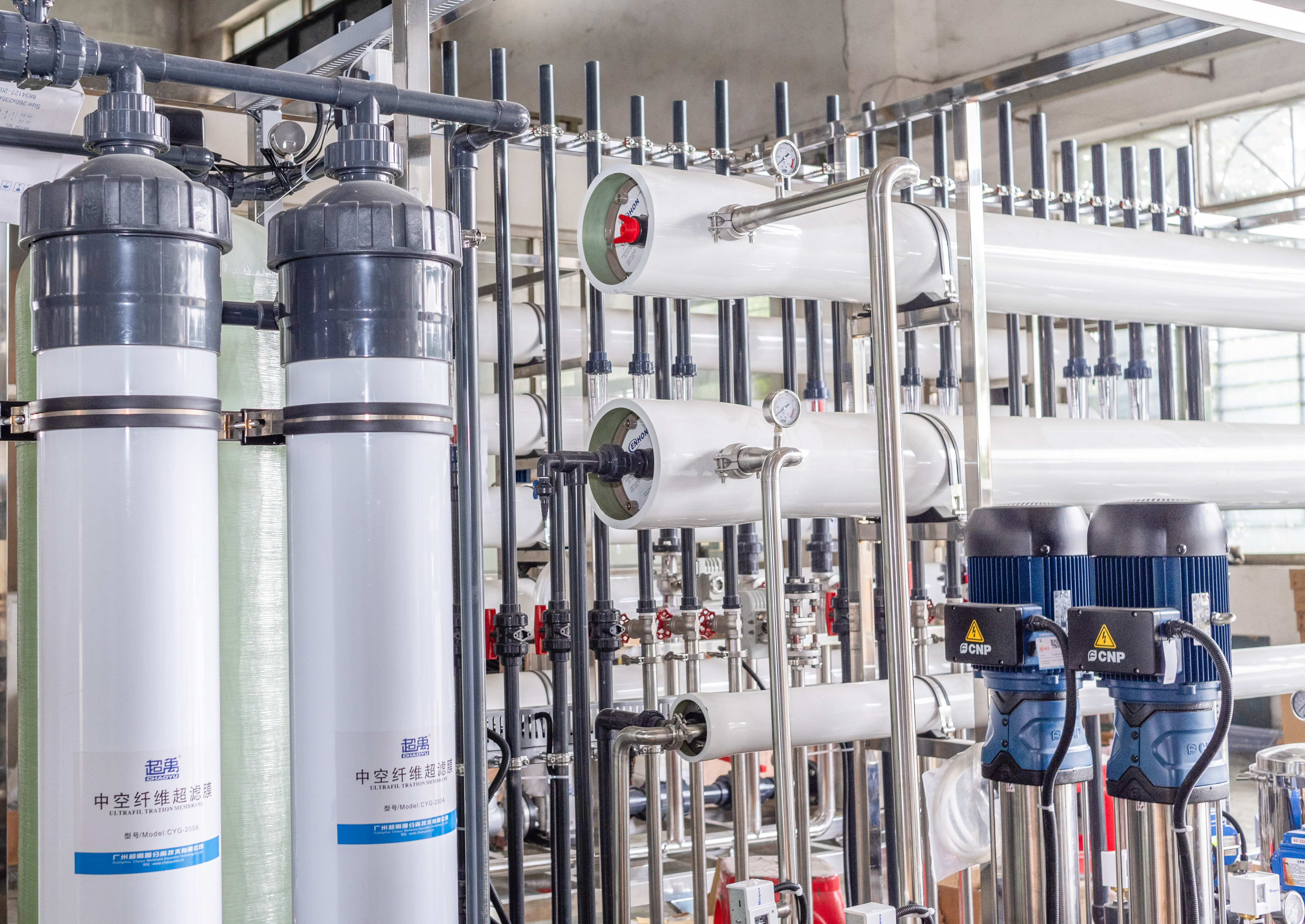 RO + EDI
RO primary desalination with continuous EDI polishing for confirmed high-purity water duties.
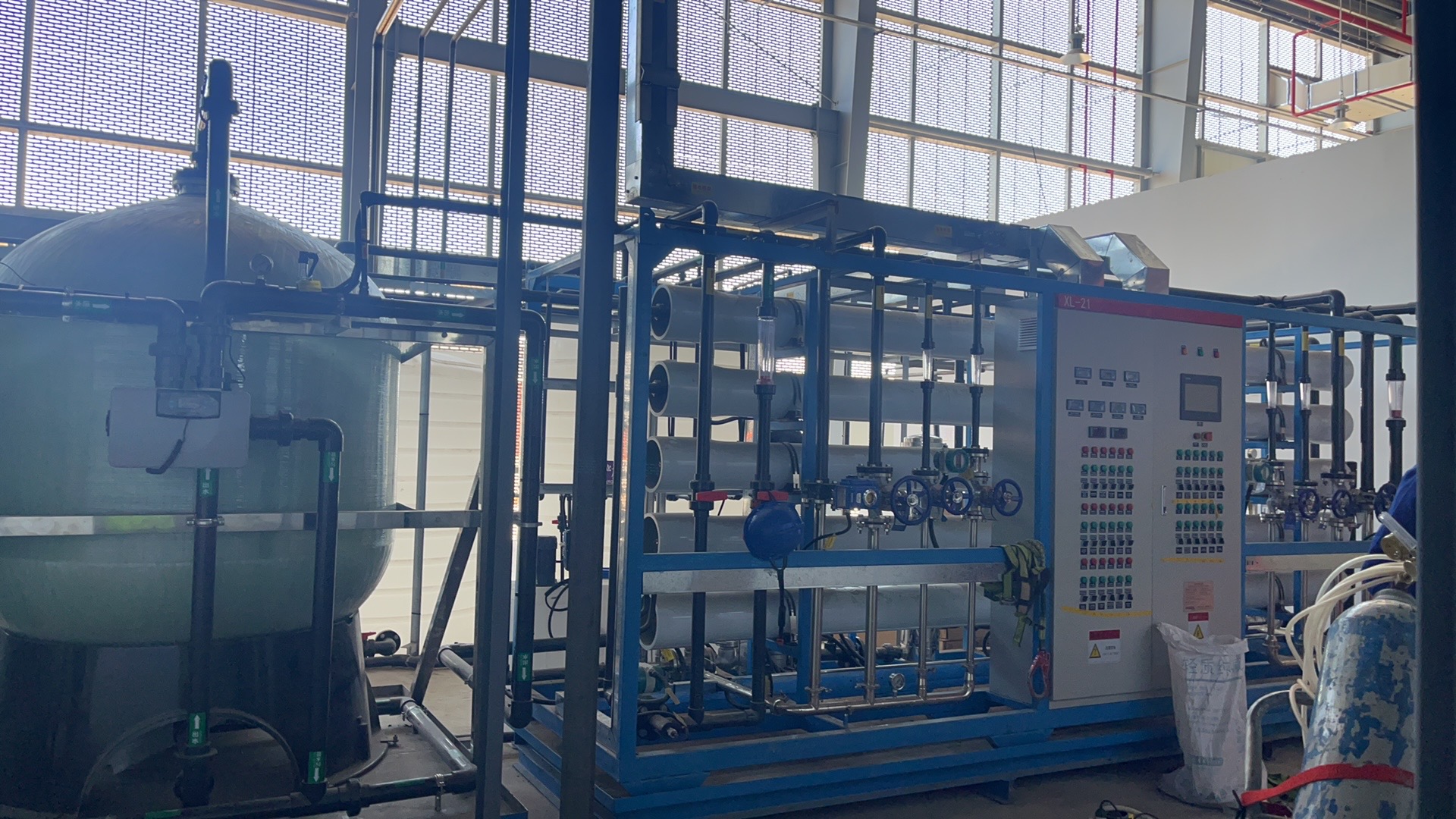 Ultrapure Water
RO, EDI and selected polishing stages for critical industrial water-quality requirements.
Share the source-water analysis, available RO permeate data, required capacity and final-water quality for an EDI feed-suitability review.