Material preparation
Where water is used
Water can support material and slurry preparation where the approved process defines it.
Why water quality matters
The requirement follows the material process and contamination-control basis.
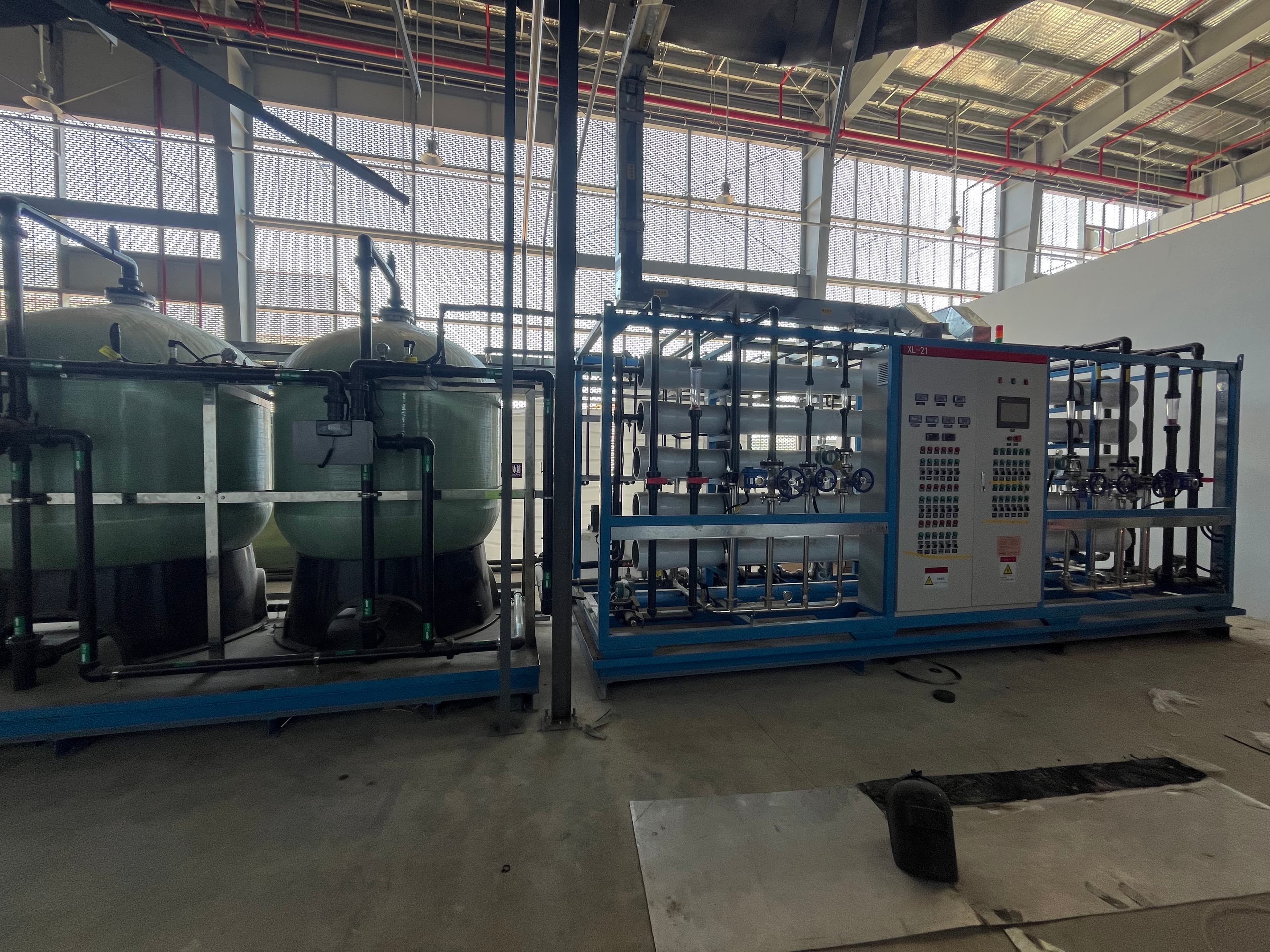
Engineered around production use points, feed-water conditions, required water quality and plant demand—from industrial pure water to high-purity treatment where the process requires it.
Water is mapped to the production context first. Not every step needs the same purity level, and not every process requires ultrapure water.
Water can support material and slurry preparation where the approved process defines it.
The requirement follows the material process and contamination-control basis.
Line demand may be intermittent, while supply must remain available through the production schedule.
Demand profile and production continuity guide storage and transfer design.
Cleaning duty is set by equipment, residue-control method and the agreed operating procedure.
Consistent water avoids introducing unnecessary variability into cleaning steps.
Selected process interfaces may require a controlled source for rinsing and final cleaning.
Ionic and particle control are considered at the actual use point, not assumed plant-wide.
Laboratory and QC uses can have requirements distinct from the production line.
Separate duty review prevents laboratory needs from being lost in a plant-average specification.
Utilities may need a practical, reliable water supply without the highest purity treatment level.
Fit-for-purpose quality helps avoid over-treating the full factory demand.
Quality is set from the real production duty. Final numbers remain application-specific and are confirmed from process requirements.
Application-specific pure or high-purity water
Material and mixing-process compatibility
Pretreatment → RO; add polishing only when confirmed
Pure water selected around the cleaning procedure
Residue, ionic carryover and repeatability
RO-based pure-water treatment with controlled delivery
Higher-purity water where the use-point specification calls for it
Ionic and particle control at the interface
RO → optional second-pass RO / EDI
Quality follows the method and instrument duty
Repeatable test conditions
Dedicated branch or selected polishing stage
Fit-for-purpose production water
Reliability and demand availability
Pretreatment → RO or shared upstream supply
The treatment level is confirmed from the specified use point—not a generic “battery-water” label.
Start at the required production use point, then select only the treatment stages that support it.
For general production, cleaning, selected process duties and plant utilities.
For confirmed tighter ionic or conductivity requirements at selected use points.
Only for genuinely critical, approved high-purity use points.
Not every lithium battery process requires ultrapure water. The treatment level should follow the confirmed use-point specification.
The flow is engineered from source water to delivery. EDI is a clearly optional polishing stage, never an automatic default.
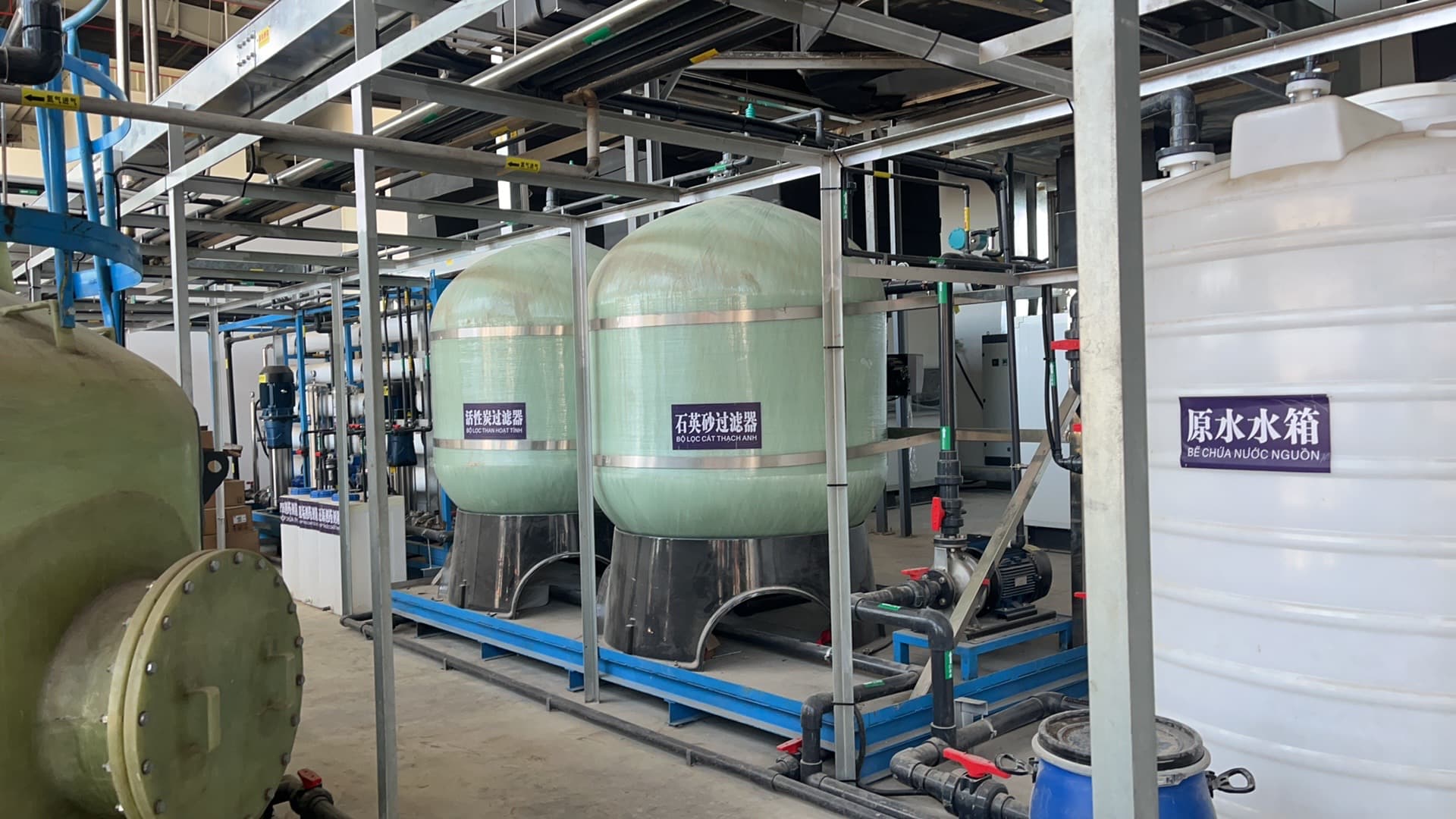
Source-water analysis establishes filtration, softening, UF or chemical conditioning needed to protect the selected treatment train.
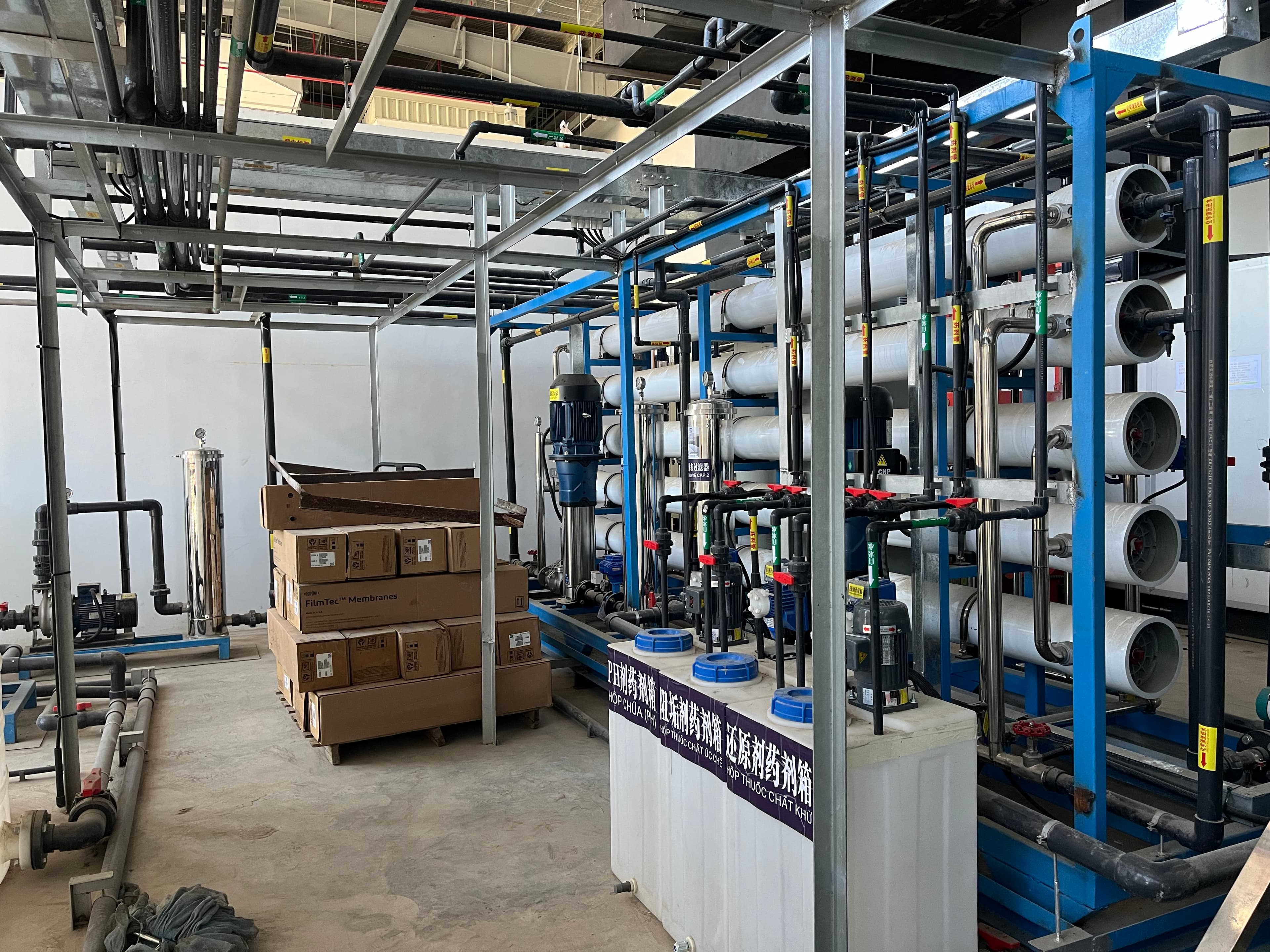
RO provides the core desalination stage. Single-pass or double-pass arrangements are selected from feed-water conditions and the confirmed duty.
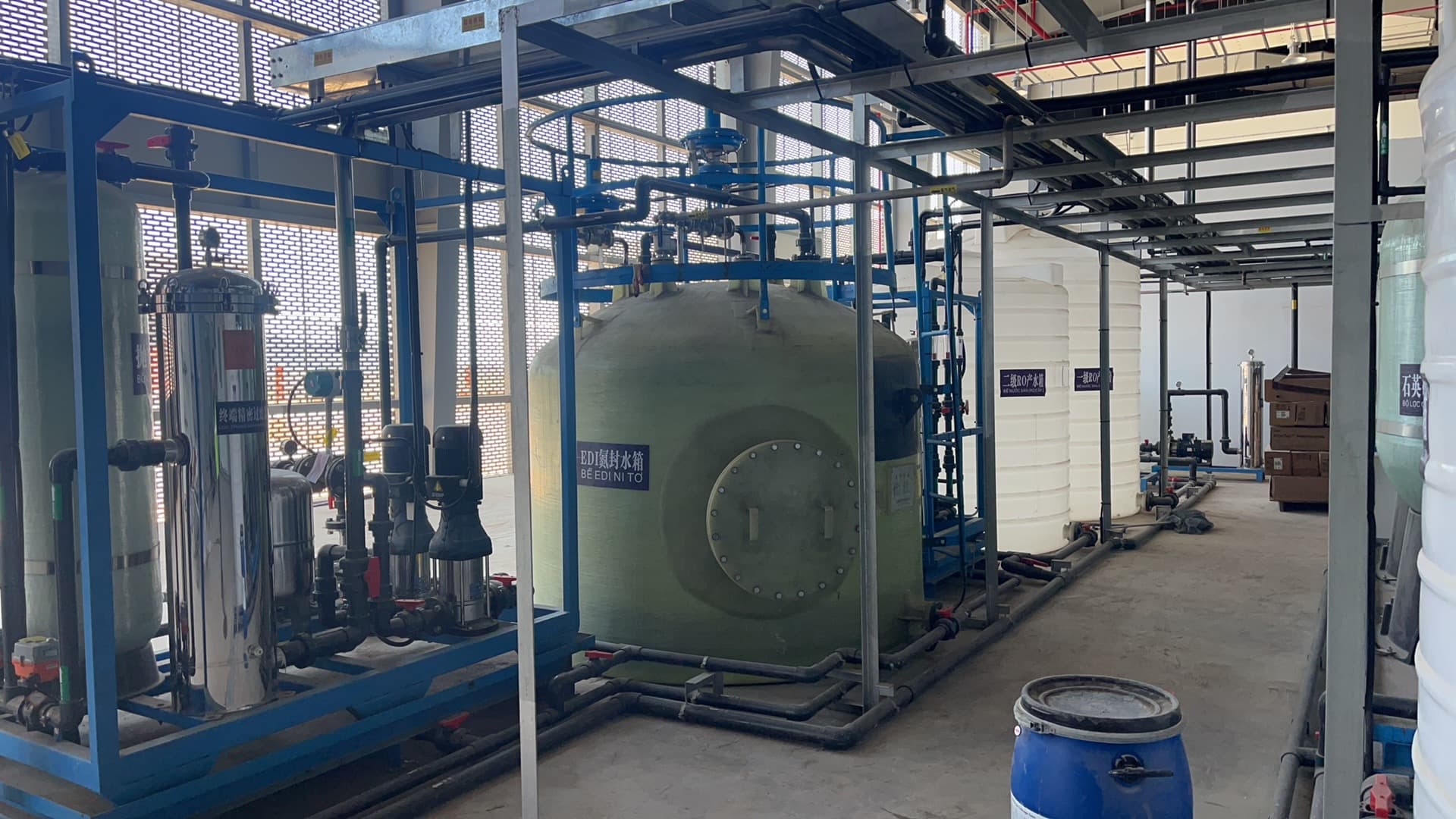
EDI provides continuous ionic polishing after suitable RO permeate when a confirmed high-purity application requires it. It is not assumed for every line.
Tank volume, transfer pumps, monitoring, recirculation where required and use-point interfaces turn treatment capacity into a stable production supply.
The water system is designed around operating conditions as well as treatment technology.
Raw-water chemistry determines the pretreatment duty and operating protection required before RO.
The relevant ionic-control basis belongs to each production use point, not a generic factory label.
Sensitive cleaning and rinsing duties may require an agreed particle-control strategy at the final interface.
Controls, storage and distribution must support stable water availability across normal operation.
Equipment is reviewed around peak draw, not only an average m³/h figure.
Modular stages, tank capacity and connection allowances can be scoped for future production growth.
A water system should not be selected from an average m³/h figure alone. It has to respond to the actual production profile.
These four systems each serve a distinct role in the treatment and delivery strategy.
Why it fitsA complete plant water-production line
Where it is usedProduction utilities, cleaning and practical pure-water duties
View system 02Why it fitsContinuous high-purity water where required
Where it is usedConfirmed tighter ionic / conductivity requirements
View system 03Why it fitsSelected critical-purity treatment stages
Where it is usedOnly genuinely critical, approved high-purity use points
View system 04Why it fitsCore desalination platform
Where it is usedFeed-water-led RO treatment and process-water production
View systemBattery production supply depends on what happens after treatment: storage capacity, transfer pumps, monitored distribution, recirculation where required and controlled interfaces at the use point.
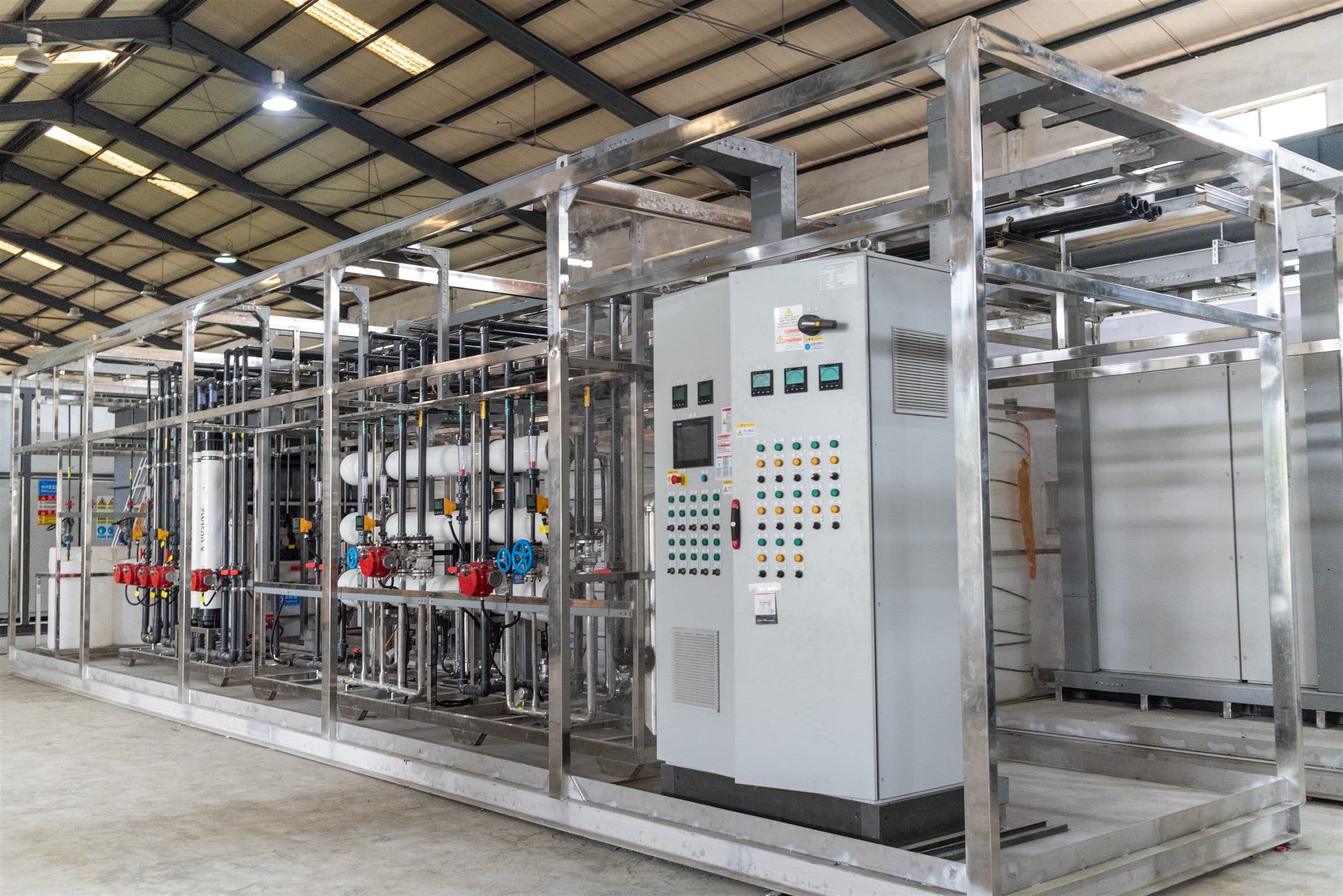
Controls are configured to keep treatment, storage, pumps and production interfaces operating as one connected water system.
A real project reference for an overseas battery manufacturing application.
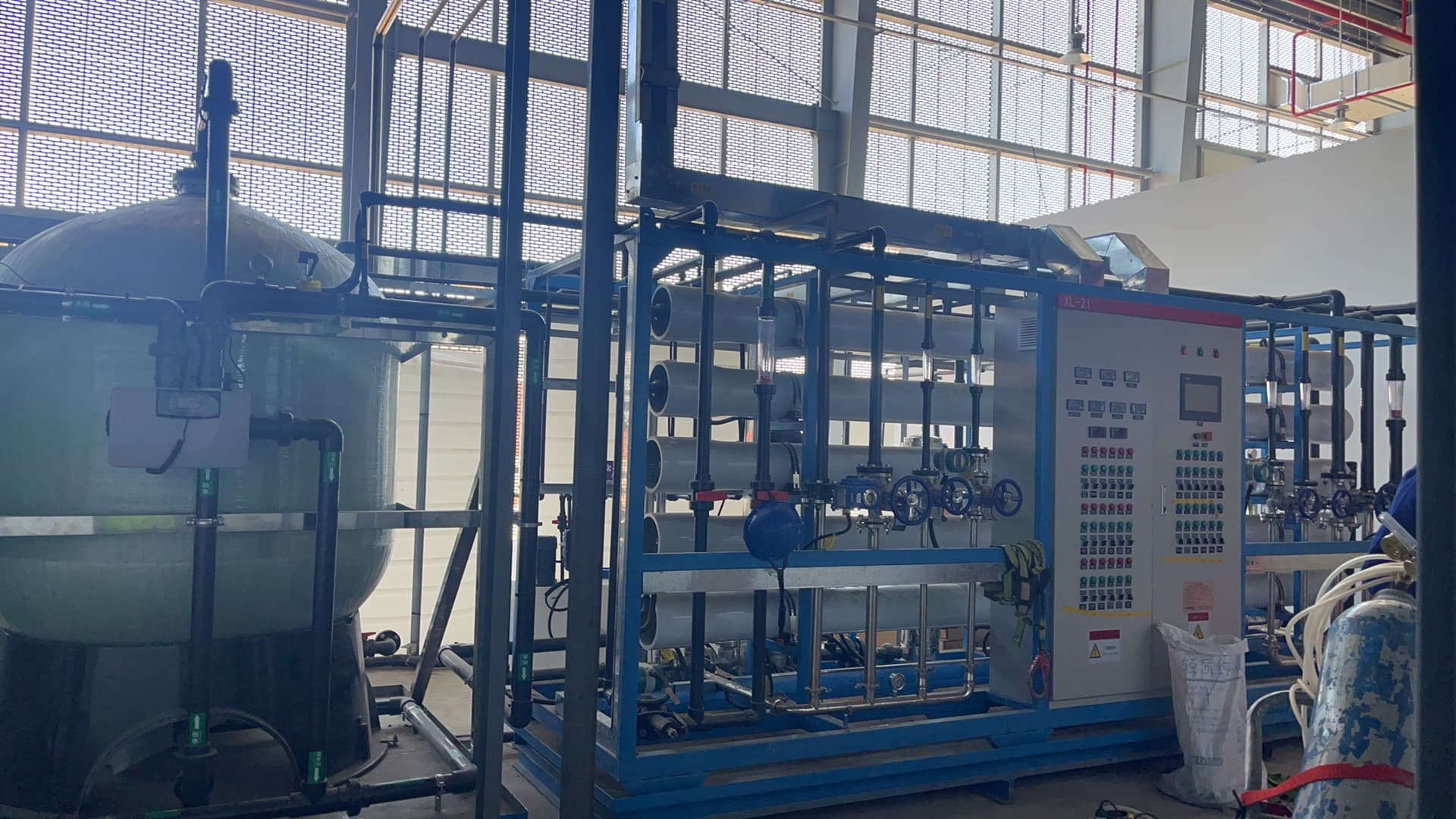
Share the inputs below and we can establish a practical treatment and delivery basis before a technical proposal.
Use points can include material preparation, equipment cleaning, process rinsing, quality control and utilities. The exact water duty must be confirmed at each production interface.
There is no single factory-wide value. Pure or high-purity water is selected from the process requirement, while utilities may require a different fit-for-purpose quality.
RO can be appropriate for many production and utility duties. The need for a second pass, EDI or final polishing depends on the specified use point and source-water basis.
EDI is selected when suitable RO permeate needs continuous ionic polishing to meet a confirmed high-purity requirement. It is not a standard stage for every battery project.
No. Ultrapure water is reserved for genuinely critical, specified use points. Treatment level should follow the approved use-point specification rather than an industry assumption.
Engineering considers normal flow, peak draw, operating hours, storage volume, distribution demand and planned expansion—not just an average hourly figure.
Storage is reviewed as a buffer between water production and peak production demand, together with shift pattern, recovery time and the distribution arrangement.
Yes. A modular treatment route, reserved interfaces and staged storage/distribution scope can be evaluated during the initial configuration review.
Please send feed-water source and analysis, use points, normal and peak demand, operating hours, required quality, project location, electrical standard, available space and timeline.
Send your feed-water analysis, use-point requirements, normal and peak demand, operating pattern and project location. We will review the route before recommending equipment.